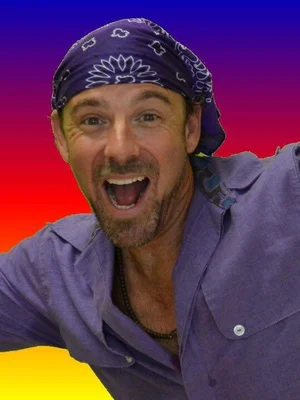
Face Dances at 33 1/3
I can’t be held responsible for blown behavior
I lost all contact with my only Savior
💿
One of my favorite albums by The Who is Face Dances.
It was their first album without their longtime drummer, Keith Moon. The Who, like many bands of that era, were incredibly tight-knit. They wrote their songs, sang their backing vocals, and created their music together. Losing a member like Keith wasn't only a tragedy. It threatened the artistic chemistry of the whole band.
So when Face Dances came out with a different drummer, it had a different feel.
Different energy.
Something was different.
I was anxious and hesitant. Could they pull it off without the raging, almost violent energy of Keith Moon on the drums?
But the album...
The actual LP...
was so artistic.
So unique.
So different.
And yet the threads of the artists I loved were still there, albeit colored a little differently.
I could face it.
I could accept the change.
Maybe that was my first softening around something that had been deeply embedded in me.
The literal revolution of a new era.
Recently, Sarah and I have been trying to find ways to slow down our pace.
One of the things yoga has taught me is that when we change the energy in one part of our life, other parts seem to pick up on it too.
So we decided to slow our life down to 33 1/3 RPM.
That's right.
We bought a record player.
And we started collecting and listening to records.
I remember the record player growing up. It was a ginormous console that took up half the living room.
And when you turned it on, there was a certain smell.
It was either a warning that the house might suddenly catch fire, or a promise—like that certain smell in the air that tells you rain is coming.
Except this smell promised a journey into rhythms and melodies that might open the door to some previously unknown world.
You just never knew.
On that particular record player, you could put a whole stack of records on it. One would drop onto the turntable and play, and when it finished, the next one would drop down.
You could listen to records for hours without moving.
Apparently, they don't make those anymore.
So we got a very small record player that requires one of us—let's be honest, me—to get up off the couch and flip the record over.
And I've been enjoying that task.
Having to EARN that second side of music.
It fascinated me as a kid to listen to the full story of an album.
To see the entire face of the artist creating the music.
I also grew up in the era of radio, and that was fun. You'd tune into the local rock station and hear all the popular songs of the day.
Occasionally, maybe on a Sunday night, there would be a program that really dug into the deeper cuts.
But most of the time, radio gave you the singles.
If you wanted to hear the rest of the artist's work, you had to seek out the album.
And now I think about the times I only released the “best version of myself” to my family or friends.
Like a single.
There was always a part of me yearning to let them see my entire face.
Recently, Sarah and I took another adventure to the record store.
I had just received some pretty crappy news that left me feeling heavy and pissed.
I looked at Sarah and said, “Let's get out of the house. Let's go down to the record store.”
We walked into this archaic den of culture and lost ourselves for more than an hour.
I could literally feel my body begin to shift.
My head had been spinning like an old 78 RPM record. Everything was moving too fast. Alvin and the Chipmunks had become the soundtrack inside my head.
But somewhere among those rows of old records, things began to slow down.
We naturally headed for the bargain bins, flipping through record after record, finding things we probably never would have chosen if we weren't feeling adventurous.
Hank Williams. Willie Nelson. Glen Campbell. Roy Clark. Patsy Cline. Neil Diamond. Merle Haggard.
Treasures.
We couldn't wait to get home and listen.
Of course we'd heard individual songs by these artists before. We'd heard the singles.
But an album was different.
An album was a snapshot of a particular time in an artist's life—what they were experiencing, what they were writing, what they were feeling.
We weren't just hearing their songs anymore.
We were getting to know them.
There's something special about listening to music with that kind of intention. Reading the liner notes. Looking at the artwork. Finding out who actually wrote the song.
Not just hearing the hits.
Not just seeing the happy Facebook post or the Instagram happiness.
The whole thing.
The full LP.
The entire emotional mood of the album.
And then, yes...
getting up off the couch and turning that sucker over to listen to Side Two.
────────── 💿 ──────────
Turn the record over.
────────── 💿 ──────────
And I think we all do that.
We don't always show our entire face.
We dance around what's going on in our lives. When someone asks how we're doing, of course we say, “Fine.”
Isn't that what's expected?
And when we ask someone else how they're doing, do we really want to hear the whole story?
Do we really want to see their entire face?
I know there was a time when I had a face I put on for work.
A face I put on to teach.
A face I put on to play music.
A face for my friends.
A face to socialize.
A face to be intimate with.
All those faces became tiring.
Sometimes I didn't know which one was which.
And when those circles crossed—when someone from one part of my life suddenly appeared in another—they sometimes saw a different face.
More than once I heard:
“I thought I knew you.”
And they did.
They just didn't know the whole album.
That multiplicity of faces cost me closer relationships and deeper intimacy with friends and family. At times, it even pushed me toward isolation because I didn't know which face to put on when opportunities for connection presented themselves.
Recently, I was talking with one of my colleagues at work.
I love this guy, Malcolm. He's edgy, incredibly smart, and still carries a little of the streets of L.A. where he grew up.
We can be talking about some ridiculously high-level technology while using slang and street talk.
Yeah, I have a little street in me too.
Malcolm was telling me about one thing he wants to teach his daughter.
One face.
If he can teach her to show the same face in everything she does, he believes she'll have far fewer problems in life.
I got that.
One face doesn't mean identical behavior in every room.
Different rooms require different things from us, just like different songs may call for a different guitar.
But it's still the same guitarist.
Underneath it all remains the same person. The same values. The same sense of humor. The same likes and dislikes.
Different rooms.
Different roles.
Same face.
When I was younger, I became a bit of a chameleon. It was a survival mechanism—a way to feel safe in environments that felt unsettling.
I could agree with the popular opinion.
I could tell friends or people I was in relationships with that I liked the same things they liked.
And I could keep that up for years.
But inevitably, my truth would begin to show.
And there it was again:
“I thought I knew you.”
So this idea of one face connects to something I've been exploring for the last few years.
The philosophy I bring to my relationships can't fundamentally contradict the philosophy I bring to my work, my friendships, my teaching, or any other part of my life.
Eventually, those different philosophies collide.
So when Malcolm said, “One face,” I got it.
As Sarah and I have slowed life down to 33 1/3 RPM, we've started listening differently.
Not just for the greatest hits.
Not just the number ones.
Not just the popular songs.
But all of it.
Hank Williams. Merle Haggard.
Heartache. Pain. Loss.
Not just the happy songs.
And hearing those parts of their lives didn't detract from our experience of the music.
It made us love these artists more.
So I started wondering:
Wouldn't our own heartaches and pain sometimes offer us the same opportunity?
At the right time and in the right place, maybe having our issues on our sleeve isn't so different from hearing an artist's issues on the record sleeve.
I've certainly been known to wear my feelings on my sleeve.
Admittedly, there were times I did that simply because I longed for someone to know me.
But underneath that was something else.
If I can show you this side of me, maybe you can show me your side of you.
And maybe we can meet there.
In that place where we begin to understand that none of us is ever really alone.
That's the one face I'm interested in.
The face that carries it all.
Frowns and smiles.
Concern and contentment.
Strength and weakness.
Excitement and apathy.
Not so someone will feel sorry for the hurts, the losses, or the challenges.
And not so someone will envy the successes, the victories, or the wins.
But so we can see each other more completely.
The real expression of a person meeting life.
I can say now that there is a tremendous amount of ease in my life that comes from showing my face more often and more authentically.
When Sarah and I met, I made a vow to myself that I would show this woman the true essence of Danny.
The quirks.
The things I love.
The things I don't.
Even my attempts at Tibetan throat singing—which, quite frankly, should have sent the majority of people running.
I wasn't going to release just the single.
She was getting the album.
And something surprising happened.
Every true thing I showed her made her love me more.
Respect me more.
Become more curious about me.
The very things I once might have hidden became opportunities for us to know each other more deeply.
And I'm learning that this has to go both ways.
I want Sarah to feel safe showing me her one face too. I want the people closest to me to know that they don't have to release only their greatest hits around me.
That requires something from me.
Acceptance.
Curiosity.
A willingness to hear the songs I might not have chosen myself.
Maybe seeing one face is also a way of seeing our shared humanity—the deep similarities between us while still honoring the things that make each of our faces entirely our own.
The record goes around and around.
One revolution after another.
And it seems to me that as it spins, the tone arm slowly moves closer to the center.
Maybe we're not so different.
We go around and around too.
Birthdays.
Seasons.
Years spinning around the sun.
And with every revolution, there is an opportunity to move a little closer to our own center.
Maybe life seems to move faster as we get older because we've become so focused on the highlights.
The hits.
The perfect presentation of our lives.
The seemingly manic need to show our best side.
That one-hit wonder.
That 45 with only two songs on it.
Maybe there's something to be said for slowing the whole thing down.
33 1/3.
Letting someone hear the hits.
The deep cuts.
The strange tracks.
The heartbreak.
The joy.
The whole album.
One face.
One revolution at a time.
Moving closer to the center.
And slowing our pace until the last track is finished.
────────── 💿 ──────────
ROAR with Love,
Danny
The Emotional Driver
“Emotion Is the Note. You Are the Song.”