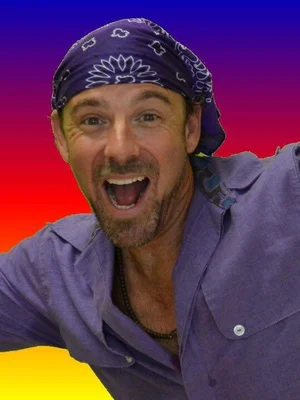
MIrror MIrror
What Are We Putting Into Each Other?
Mirror neurons are the body’s quiet way of saying:
“I recognize you.”
They fire when we act.
They fire when we witness another person acting.
They help us learn, empathize, and feel the invisible thread between nervous systems.
They are part of the reason a yawn spreads through a room.
Part of the reason a smile softens us.
Part of the reason someone else’s tension can suddenly feel like our own.
In yoga language, we might say it this way:
What we place our attention on, we begin to take on.
Recently, a friend was telling me a story.
She goes to see a massage therapist who is also a body healer and does energetic work. If you have not explored how bodywork, energy work, or somatic healing can help, it is something worth being curious about. But that is a conversation for another day.
My friend has a close relationship with this practitioner. There is friendship there. Trust. History.
And as she was telling me the story, she described this person as someone who experiences extreme highs and extreme lows.
What I loved was that my friend shared this without judgment.
It was not criticism.
It was simply:
This is who this person is.
My friend had scheduled a session for massage and bodywork, and she was really looking forward to it.
She needed it.
But when she arrived, the practitioner was in a state.
Fired up.
Angry.
Emotional.
Agitated.
I can only guess that because they were friends, the practitioner felt safe enough to share what was happening. And friendship does create room for honesty.
But my friend began to wonder:
Is this really the right time for me to receive bodywork?
Still, it seemed like the practitioner settled enough to begin. My friend had seen this person hold space beautifully before. But this time, something felt more intense.
They did the session.
And afterward, my friend told me what happened.
She said:
“Danny, I had the worst dreams. I tossed and turned all night. And when I woke up, I was extremely agitated and angry. I had no idea why.”
But I think she did know.
And I think I knew too.
Because sometimes the question is not:
What happened to me?
Sometimes the question is:
What did I just take in?
We take on the qualities of what surrounds us.
And when we are open, vulnerable, tired, or in a state of receiving, we may be even more available to absorb what is around us.
This is not about blame.
It is about awareness.
It is about recognizing that our nervous systems are always listening.
They listen to tone.
They listen to posture.
They listen to breath.
They listen to the emotional weather in the room.
Here is a simple example.
Like many people, I can get fascinated by true crime stories. I do not know why exactly. It seems to run in my family. My dad loves mysteries and has written thirteen books, so maybe it is in the blood.
Sometimes I will have a true crime show on in the background while I am working at home.
But here is the thing.
If I am in a vulnerable state, or if I am tired, open, or already carrying stress, I can feel myself taking on the trauma of the story.
I get a little more agitated.
A little more intense.
A little more alert to every sound in the house.
Especially late at night.
My sleep gets restless.
My dreams get disturbed.
My body starts carrying something that was never mine to begin with.
That is natural.
Because what we are exposed to does not just pass through the mind.
It can get stored in the body.
This is part of the heart of trauma therapy.
Something happens.
The body takes it in.
And then, at some point, we have to help the body let it move.
Sometimes talking helps.
But often, the body needs more than words.
It needs breath.
It needs movement.
It needs mindfulness.
It needs just enough contact with the feeling to let the energy complete itself and leave.
Not all at once.
Not by force.
But with presence.
And sometimes, healing is also the choice to turn toward joy.
Not as avoidance.
Not as denial.
Not as pretending trauma is not real.
I would never minimize the grip trauma can have on us. I have lived enough of that grip myself.
But once we understand that something has a hold on us, we can begin to loosen the hold.
We can breathe.
We can move.
We can laugh.
We can sing.
We can pray.
We can choose what we place our attention on.
And slowly, the body begins to remember:
I am not only what happened to me.
Yoga teaches that what we meditate on, we begin to become.
That is the heart of practice.
Our dear friend David at the studio has been meditating for decades. I love his dedication. I love the steadiness of his practice.
He is one of the most balanced people I know. He truly embodies the word equanimity.
And why?
Because every day, he places his attention on the highest state of being. On universal consciousness. On something larger than the little storms of the day.
That practice expands the empathy within him.
It expands the patience within him.
It expands his ability to hold and manage stress.
He has spent years putting peace into his own system.
And now, when you are around him, you can feel it.
So we have to look honestly at what we are exposing ourselves to.
What am I watching?
What am I listening to? MUSIC can "calm the savage breast" or agitate it.
What conversations am I replaying?
What emotional weather am I sitting in?
What rooms am I walking into without grounding myself first?
Because some forms of input increase anxiety.
Some increase depletion.
Some increase anger.
Some increase fear.
And some increase steadiness, joy, faith, humor, and love.
Let me take it one step further.
Food.
Next to the air we breathe and the water we drink, food is one of the most intimate things we take into the body.
And in the preparation of food, there is an opportunity to impart energy into it.
Just as my friend may have taken in the emotional energy of her practitioner, we can also receive the energy that surrounds the food we eat.
My dear friend Arun once said to me:
“Danny, we are…”
Well, I will let you insert your own F-word here.
He was talking about food.
Even the best organic foods today are often depleted compared to what food carried twenty years ago, let alone one hundred years ago.
So I asked him:
“What is the solution?”
He smiled, as he does, and said:
“Prayer, of course.”
And he taught me a beautiful prayer to help clear the energies that food may have taken on before it reaches our plate and enters our bodies.
That teaching stayed with me.
Because it reminded me that nourishment is not only chemical.
It is emotional.
It is energetic.
It is relational.
It is spiritual.
*** I've included that prayer at the bottom of this email
When we cook with joy, the food receives that joy.
When we cook with resentment, the food receives that too.
When we make a meal with faithfulness, gratitude, and a song in our heart, something opens.
And everyone who eats that meal receives more than calories.
They receive the atmosphere we created.
This is not superstition to me.
This is responsibility.
So yes, we want to be aware of what we are taking in.
But we also want to be deeply aware of what we are putting into others.
When we carry ourselves with joy and playfulness, those around us begin to take on those qualities.
When we bring kindness into a room, the room changes.
When we bring agitation into a room, the room changes.
When we bring steadiness into a room, the room changes.
We are always contributing to the emotional environment.
Always.
So maybe, like Captain Kirk, we need to learn when to raise the force shields.
When we know we are going into a challenging situation, we can take a few moments first.
Ground the feet.
Feel the breath.
Remember:
This is not all about me.
I do not have to absorb everything around me.
I can stay grounded even when fire is moving nearby.
And we can also set a simple intention:
May I be surrounded by joy, happiness, faithfulness, and love.
May I share those qualities with others.
May I not lose myself in the weather of the room.
I learned this very clearly through teaching group classes.
People in the room begin to take on the energy I bring into the class.
When I realized that, my sense of responsibility changed.
I could not just show up stressed out and unconscious.
I could not just show up with every problem hanging openly from my sleeves.
I could not just show up in frustration, depletion, or victimhood and pretend that it would not affect the room.
But here is the important distinction:
I could still show up exactly as I am.
I could acknowledge:
I am tired today.
My resources are low.
I am carrying some stress.
I am human too.
But I could choose not to teach from collapse.
I could choose to teach from honesty.
I could choose to teach from empowerment.
I could choose to let joy still have a seat in the room.
There will never be a time when life stops offering us reasons to lose balance.
And honestly, I love knowing that.
Because it means the practice is always alive.
There will always be stress.
There will always be grief.
There will always be anger.
There will always be uncertainty.
There will always be somebody else’s emotional weather blowing through the room.
But there are some things that cannot be taken from us.
They can only be given away.
Our joy cannot be stolen.
But we can give it away.
Our peace of mind cannot be stolen.
But we can give it away.
Our understanding cannot be stolen.
But we can give it away.
So the practice becomes learning how to keep what is sacred inside of us while still remaining open-hearted to the world.
Give it away, give it away, give it away now
What I've got, you've got to get it, put it in you
Reeling with the feeling, don't stop, continue
Who knows the group and song from above? I think that song is more connected that I had originally thought.
We know the old saying:
We are what we eat.
But maybe we are also what we watch.
What we hear.
What we repeat.
What we practice.
What we absorb.
What we radiate.
And our environment is not just the furniture, the lighting, or the walls.
Our environment is the emotional field we create.
A smile.
A laugh.
A loving touch.
A nod.
A sound of understanding.
These things create harmony.
They create safety.
They create depth.
They tell another nervous system:
You are recognized here.
And yes, my friend did find her way back.
After that bodywork session, when we talked, we ended up laughing.
We shared stories.
We found joy.
And that laughter seemed to discharge the tangle of emotions she had been carrying.
Maybe that is also medicine.
Maybe sometimes the mirror neuron system does not only absorb pain.
Maybe it also absorbs delight.
Maybe laughter is one nervous system reminding another:
We are safe now.
So this week, the invitation is simple.
Notice what you are taking in.
Notice what you are putting out.
Notice what changes in your body after certain conversations, shows, rooms, foods, or people.
And notice what happens when you choose to become the source of something different.
A little more steadiness.
A little more kindness.
A little more joy.
A little more faith.
A little more breath.
Because every room is a mirror.
And every nervous system is listening.
ROAR Practice
Recognize what you are taking in.
Notice the energy, the words, the tone, the images, the food, the room.
Observe what changes in your body.
Do you feel softer? Tighter? Agitated? Safe? Open? Drained?
Allow yourself to pause before absorbing or reacting.
You do not have to take everything in. You do not have to become the room.
Respond by choosing what you want to place into the field.
A breath. A smile. A prayer. A boundary. A laugh. A song.
If you find it hard to speak,
If you’re feeling kind of blue,
I can’t tell you what to say,
But I can tell you what to do.
Write it all out.
Get it out of you.
Feel what you say.
And say what you do.
Mirror, mirror on the wall…
Maybe the question is not who is the fairest.
Maybe the question is:
What am I reflecting into the world today?
OH! Here is the link to the Food Prayer taught to me by my dear friend Arun
ROAR with Love,
Danny
The Emotional Driver
“Emotion Is the Note. You Are the Song.”